Accessibility

Sign · LINA

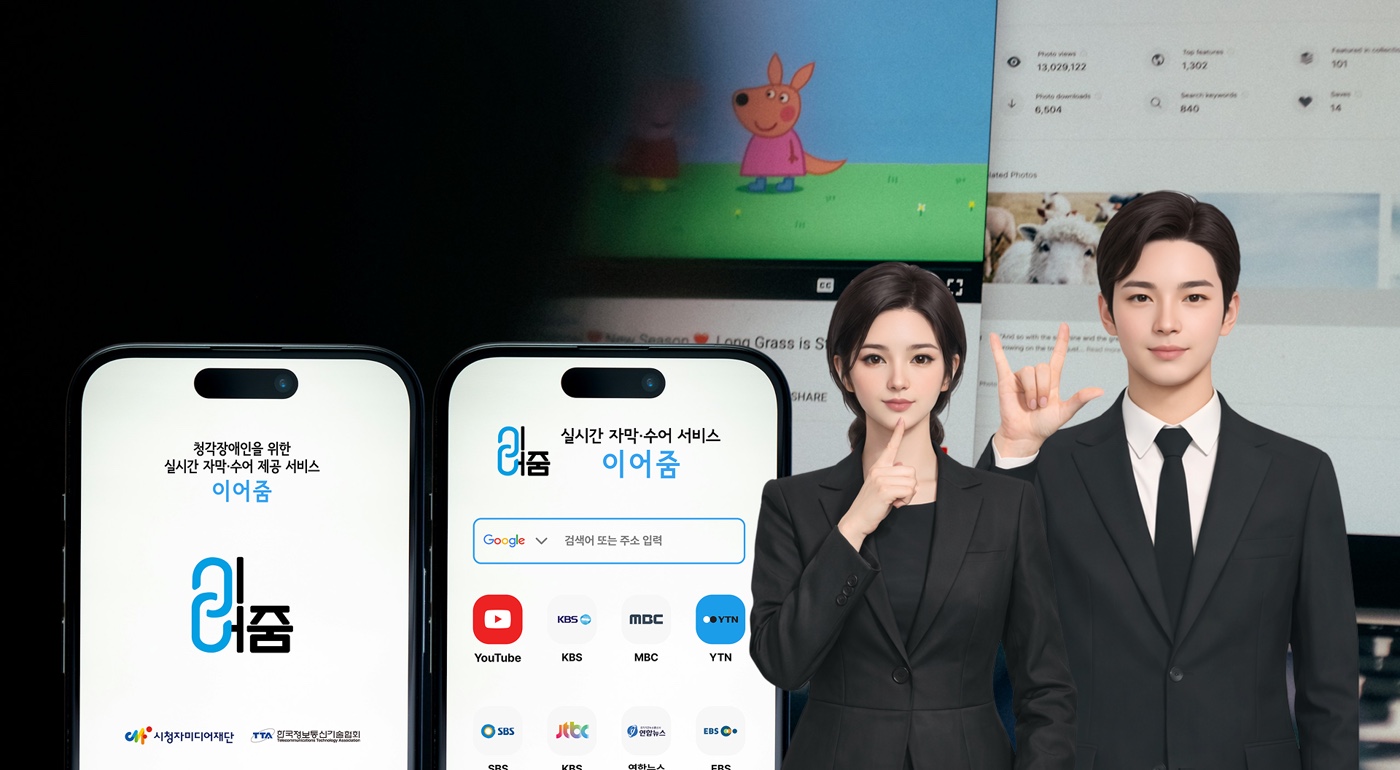
AI sign-language avatars 'LINA & BARO' interpret into sign language in real time.

We bring AI to sign language — the language of Deaf and hard-of-hearing people who face barriers in spoken communication — so they can communicate freely and access information on their own terms. It is a sign-language solution built to remove everyday friction across education, daily life, and travel, and to close the gap between people with and without hearing disabilities.

Real-time KSLLINA & BAROTwo-way recognitionOn-device translation
Sign · LINA product screen
OVERVIEW

AI sign-language avatars 'LINA & BARO' (Language & Information Narrative Avatar) interpret speech and text into natural Korean Sign Language (KSL). Three core modules — sign recognition, sign translation, and sign avatar — combine to deliver two-way communication that goes beyond listening to recognize the user's own signing. Embed it in kiosks, video, and broadcasting to improve information accessibility for Deaf users while meeting your organization's accessibility obligations and ESG goals at once.

Request a demo
WHO IT'S FOR

Built for teams like yours

Deaf users can't access our information

Voice announcements don't reach them. Real-time sign-language interpretation does.

We must meet accessibility requirements

Legal and regulatory compliance is a must. Embed it in kiosks, video, and broadcasting.

We want to strengthen ESG and brand trust

Show your social commitment. Digital inclusion builds lasting brand trust.

KEY FEATURES

Key features

FEATURE

AI metahuman avatar

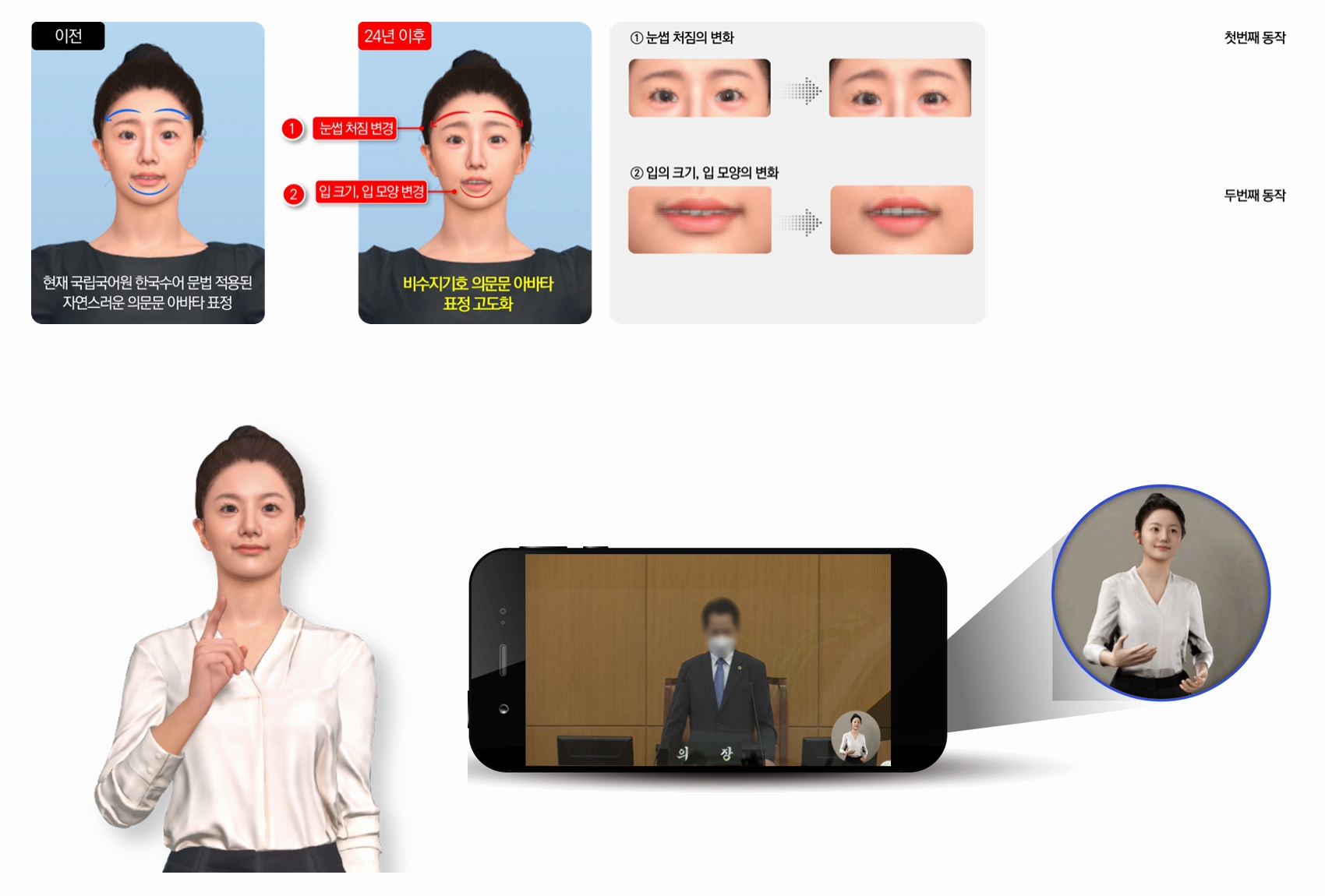
'LINA', a digital human with natural facial expressions and hand movements, interprets speech and text into sign language. Modeled closely on a real person, her lifelike facial expression makes signing clear and highly legible.

AI metahuman avatar
FEATURE

Refined expressions and movements

Built on 400,000 Korean–KSL translated sentences and 40,000 Korean sign animations accumulated over six years of R&D, applying the National Institute of Korean Language's KSL grammar. We further refined non-manual markers — eyebrows, mouth shapes, and more — to produce natural signing that conveys meaning precisely.

Refined expressions and movements
FEATURE

Real-time sign-language interpretation

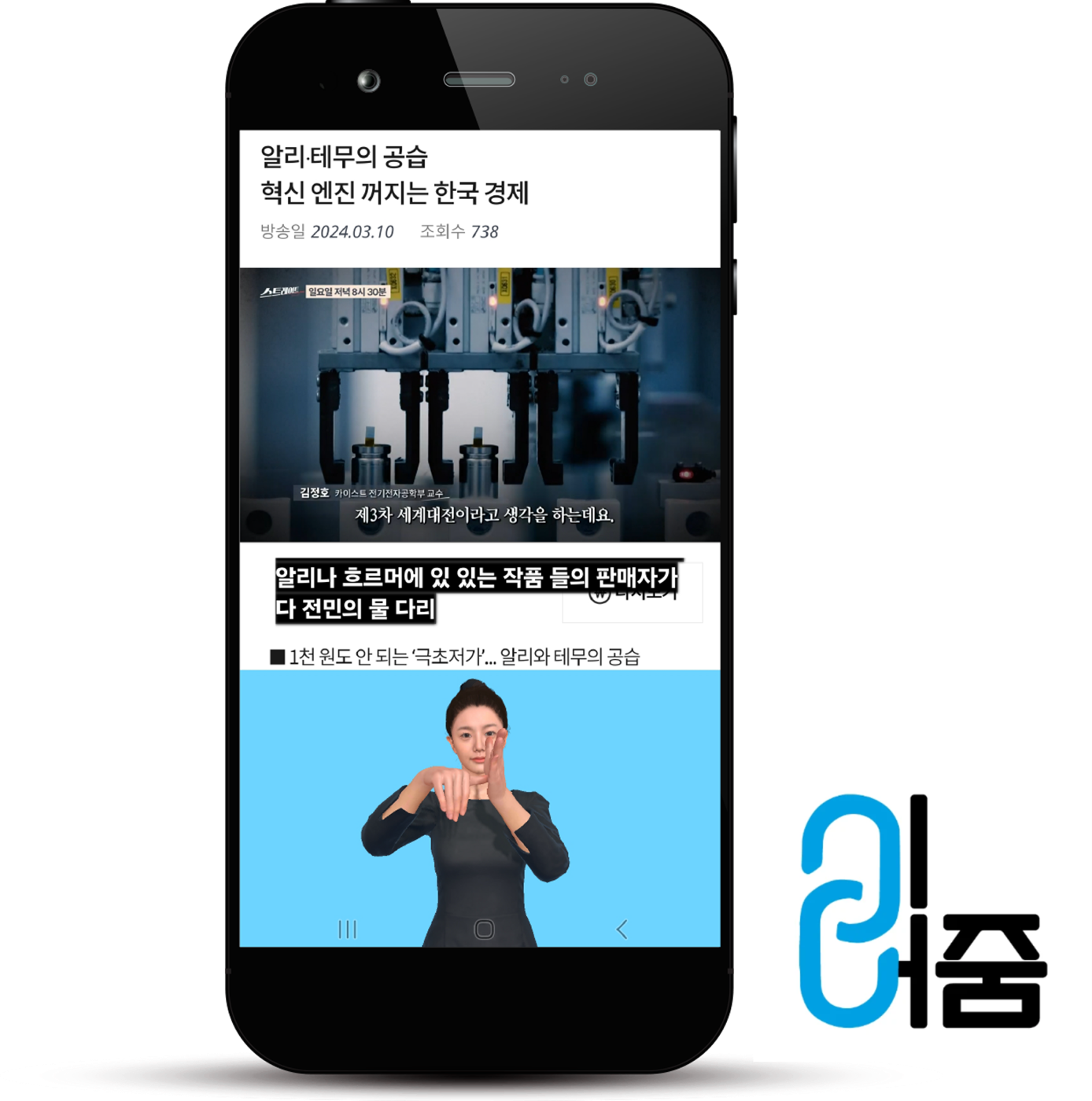
Our in-house sign translation solution uses an AI translation engine to translate between Korean and Korean Sign Language. A Unity 3D sign avatar runs on PC and mobile in real time, linking individual signs into fluid, complete KSL sentences. (Eojum app — meaning: 'connecting')

Real-time sign-language interpretation
FEATURE

Embed anywhere · accessibility

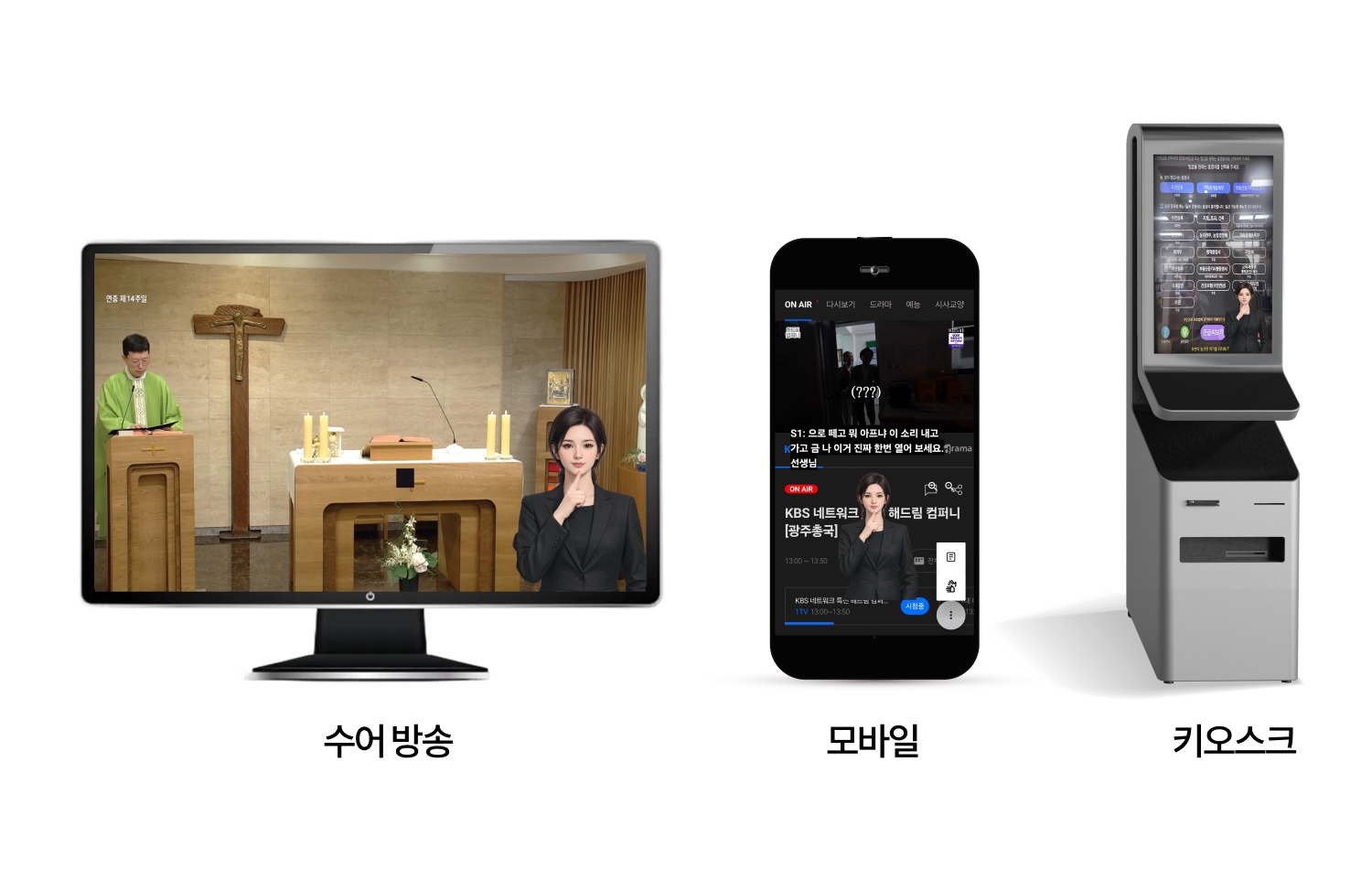
Embed it in kiosks, video, broadcasting, and more — improving information accessibility for Deaf users and advancing your organization's ESG at the same time.

Embed anywhere · accessibility
MAIN MODULES

One system, 3 core modules

A full sign-language stack: recognition → translation → avatar. It goes beyond listening — it reads the user's signing and answers back.

Sign recognition
01 · RECOGNITION

Sign recognition

AI recognizes the user's signing through a camera and converts it into Korean sentences. This is the input stage of two-way communication — reading the user's signs, not just listening.

Sign translation
02 · TRANSLATION

Sign translation

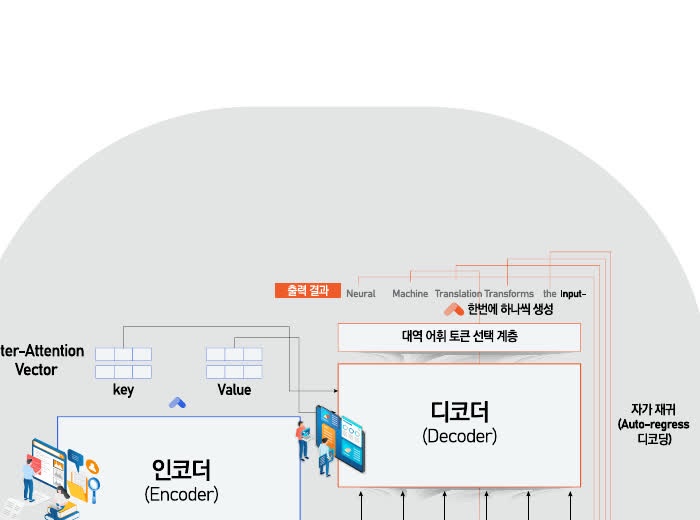
Our in-house translation engine converts Korean sentences into KSL sentences. MeCab-ko-dic morphological analysis and CTranslate2 process in real time under 100 ms, with on-device support.

Sign avatar
03 · AVATAR

Sign avatar

Digital humans LINA and BARO — with natural expressions and hand movements — generate and perform sign language from speech and text. Photorealistic 3D scanning and motion capture maximize legibility.

ANIMATION PROCESS · 3D AVATAR PRODUCTION

From a real person to a digital human

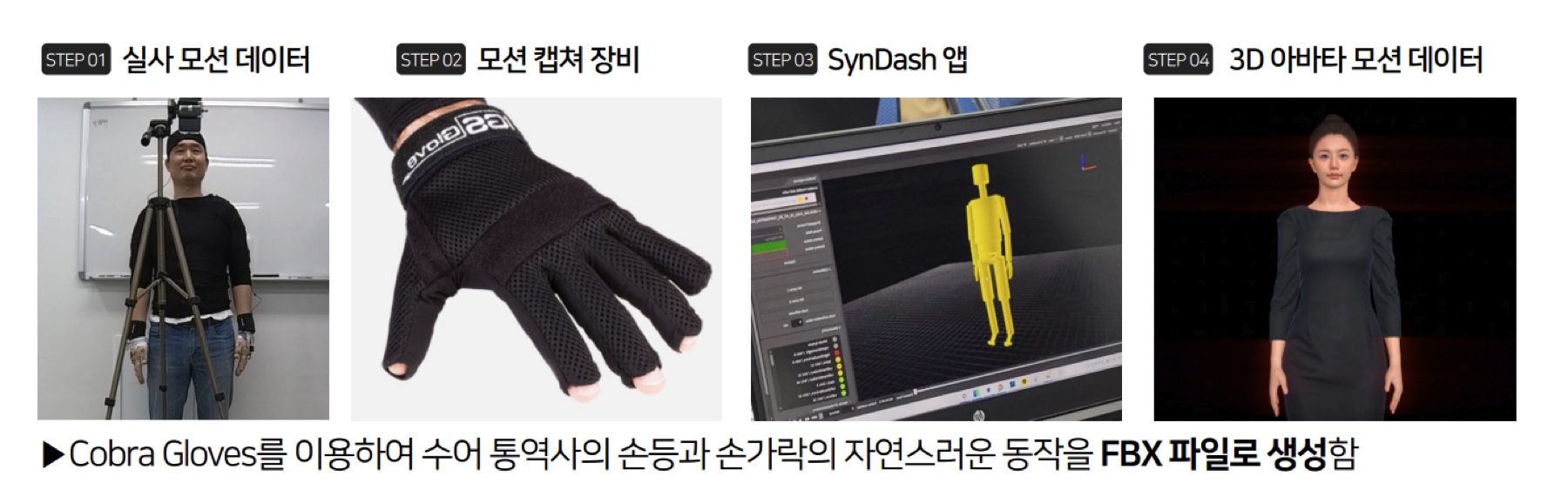
The LINA & BARO 3D avatars are completed as sign-language video through a 5-step character production process and a 4-step motion and facial capture process. A real person is scanned via 3D Photometric Scan and Reality Capture, then cleaned up into a photorealistic model — so facial expression is natural and signing is highly legible.

Digital human character production · 5 steps
Digital human production process — Model Selection · 3D Photometric Scan · Reality Capture · Clean-up · Final modeling
Motion and hand capture · 4 steps
Motion capture process — live motion data · motion capture equipment · SynDash app · 3D avatar motion data

▶ Cobra Gloves capture the natural movement of a sign-language interpreter's hands and fingers, generating FBX files.

For Korean-to-KSL automatic translation, Timbel owns a proprietary language-intelligence and visual-intelligence platform.
PLATFORM COMPOSITION

Service architecture

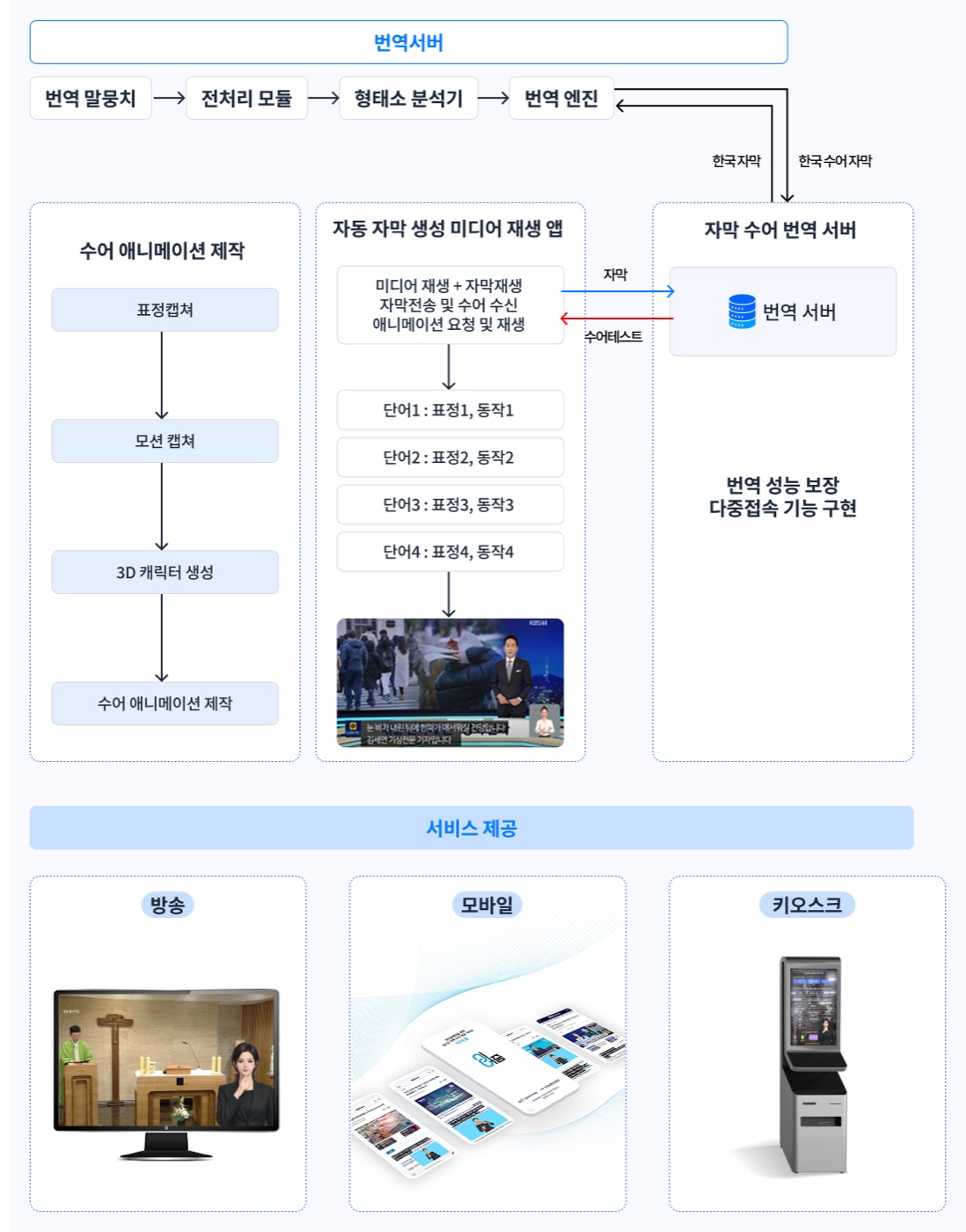
We built our own Korean natural-language sentences, KSL translated sentences, and word maps, then developed sign animation, a sign-language app, and a caption-to-sign translation server on top of them. From this foundation, the 3D sign avatar delivers the service across broadcasting, mobile, and kiosk devices.

Sign-language service architecture — translation server, sign animation production, automatic caption app, caption-to-sign translation server, delivered to broadcasting, mobile, and kiosks
MOBILE · EOJUM

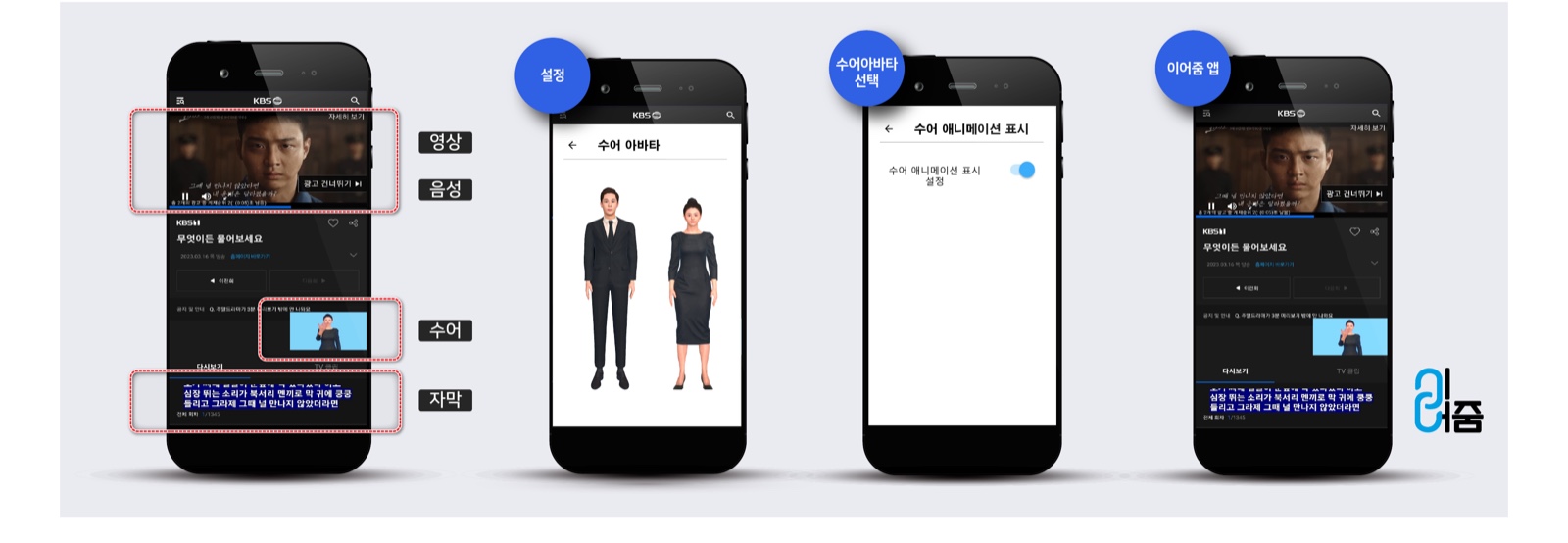
On mobile too, with Eojum

Built on a speech-to-caption browser app (iOS and Android) that converts and plays speech as captions, it also provides sign translation and animation playback. Freely toggle video, audio, sign language, and captions — and pick your preferred sign avatar to watch in real time.

iOS · AndroidSpeech-to-captionSign animation playback
Eojum mobile app — control video, audio, sign language, and captions, select a sign avatar, play sign animation
SPECIFICATION

Key specifications

Composition3 core modules — sign recognition · sign translation · sign avatar
AvatarsLINA (female) · BARO (male) — digital humans built from photorealistic 3D scans and motion capture
Sign recognitionCamera-based recognition of the user's signing, converted into Korean sentences (two-way)
Sign translationMeCab-ko-dic morphological analysis + CTranslate2 — under 100 ms, on-device
Training dataTranslation engine trained on TTA's caption–sign-language parallel corpus
DeploymentKiosks · smart signage · video · broadcasting · council proceedings relay systems
ComplianceMeets accessibility obligations including the Anti-Discrimination Against Persons with Disabilities Act and web accessibility standards
ReferencesPublic-sector deployments including the Community Media Foundation and Anseong City
APPLICATIONS

Where can it be applied?

From civil services and administrative work to smart signage systems

SYSTEM 01

Handle civil-service requests and simple administrative tasks at government offices and public facilities.

SYSTEM 02

Embed it in smart signage to deliver all kinds of information in sign language for Deaf users.

SYSTEM 03

For simple administrative tasks, citizens can complete their business without unnecessary procedures.

SYSTEM 04

Citizens and administrative staff can process government services contact-free.

SYSTEM 05

A signage system capable of sign recognition, enabling genuine two-way communication.

Interactive council proceedings relay system — applies STT and digital human LINA to council and broadcast relays, delivering real-time captions and sign language together so Deaf citizens can actively participate in legislative affairs.
CASE STUDIES

Deployments

Technology like Sign · LINA, proven in the field

View all case studies
FAQ

Frequently asked questions

What is Sign · LINA?
AI sign-language avatars 'LINA & BARO' that interpret speech and text into natural Korean Sign Language (KSL). Three core modules — sign recognition, sign translation, and sign avatar — combine to enable two-way communication that even recognizes the user's own signing.
Where can it be deployed?
It can be embedded in a wide range of environments — kiosks, smart signage, video, broadcasting, and council proceedings relay systems.
Does it interpret in real time?
Yes. It converts speech and text into KSL in real time, and supports two-way communication by recognizing the user's signing through a camera and converting it into Korean sentences.
What kinds of organizations adopt it?
Organizations with accessibility obligations — public agencies, local governments, airports, and broadcasters (e.g., the Community Media Foundation and Anseong City).
Does it help meet accessibility regulations?
Yes. It satisfies accessibility obligations such as the Anti-Discrimination Against Persons with Disabilities Act and web accessibility standards, while digital inclusion strengthens both your organization's ESG and brand trust.
How are the avatars created?
LINA (female) and BARO (male) are digital humans built from photorealistic 3D scans and motion capture, delivering interpretation with natural facial expressions and hand movements.
What technology powers the translation engine?
It performs translation in under 100 ms — even on-device — based on MeCab-ko-dic morphological analysis and CTranslate2, trained on TTA's caption–sign-language parallel corpus.
RELATED

Related products

Bring Sign · LINA to your organization

From consultation to tailored deployment, Timbel is with you all the way.